
If you have ever browsed a sweet shop in Amsterdam or scrolled through American cannabis brands online, you have probably wondered the same thing every UK shopper asks: are cannabis edibles legal in the UK? It is one of the most searched cannabis questions in Britain, and the answer is more nuanced than a simple yes or no. This guide breaks down exactly where cannabis edibles sit under UK law in 2026, the difference between THC and CBD products, and how to shop without falling foul of the rules.
Cannabis law in the United Kingdom is built around one key chemical: tetrahydrocannabinol, better known as THC. THC is the psychoactive compound that produces the classic cannabis “high”. Understanding how the law treats THC is the single most important thing to grasp before you buy any cannabis edibles, because the legal status of an edible depends almost entirely on what is actually inside it.
Are cannabis edibles legal in the UK? The short answer
Under the Misuse of Drugs Act 1971, cannabis and THC are classified as a Class B controlled substance. That means edibles containing more than trace amounts of THC are not legal to produce, sell or possess in the UK. So when people ask whether cannabis edibles with a meaningful THC dose are legal, the honest answer is no – not in the same way they are in parts of the United States or Canada.
However, the phrase “cannabis edibles” covers a huge range of products. Edibles made from CBD (cannabidiol) and other non-controlled hemp compounds occupy a completely different legal space. CBD itself is not a controlled substance, which is why CBD gummies, oils and sweets are sold openly on the high street. The distinction between THC and CBD is the line that separates a legal product from an illegal one.
THC edibles versus CBD edibles
To make sense of cannabis edibles in the UK, it helps to split them into two families:
- THC edibles – gummies, chocolates and sweets that deliver a psychoactive dose of THC. These are controlled and not legal to sell in the UK.
- CBD edibles – products made with cannabidiol and only trace THC, sold as food supplements. These are widely available, provided they meet strict limits and food-safety rules.
You can explore the legal end of this market through our CBD gummies UK range, which is formulated to stay within the boundaries the law sets for hemp-derived products.
The two rules that decide if an edible is legal
1. The THC limit
For a CBD product to be sold legally, it must contain only insignificant traces of controlled cannabinoids. In practice, reputable UK retailers work to extremely low THC thresholds so the finished edible has no psychoactive effect. If a sweet can get you high, it is no longer a CBD product in the eyes of the law – it is a controlled THC edible, regardless of how it is marketed.
2. Novel Food authorisation
Since 2021, CBD ingestibles in Great Britain have been treated as “novel foods”. This means any CBD edible sold legally should come from a brand whose product is on the Food Standards Agency (FSA) public list, or linked to a validated application. Novel Food rules exist to make sure cannabis edibles sold as supplements are safe, accurately labelled and consistent in dose. It is a useful badge of credibility when you are comparing brands.
What about THCP, HHC and other new cannabinoids?
A wave of newer compounds – THCP, HHC, THCV and similar – has blurred the conversation around cannabis edibles. Marketing often presents these as legal grey-area alternatives to THC. The reality is that UK law captures THC and many of its closely related psychoactive analogues, and the Psychoactive Substances Act 2016 was specifically designed to catch novel intoxicating compounds. Treat any edible sold purely on the promise of a strong high as a legal risk, no matter what the cannabinoid is called. If you are curious about how these compounds differ, our piece on THC and CBD gummies explains the science in plain English.
Why do shops still sell products that look like THC edibles?
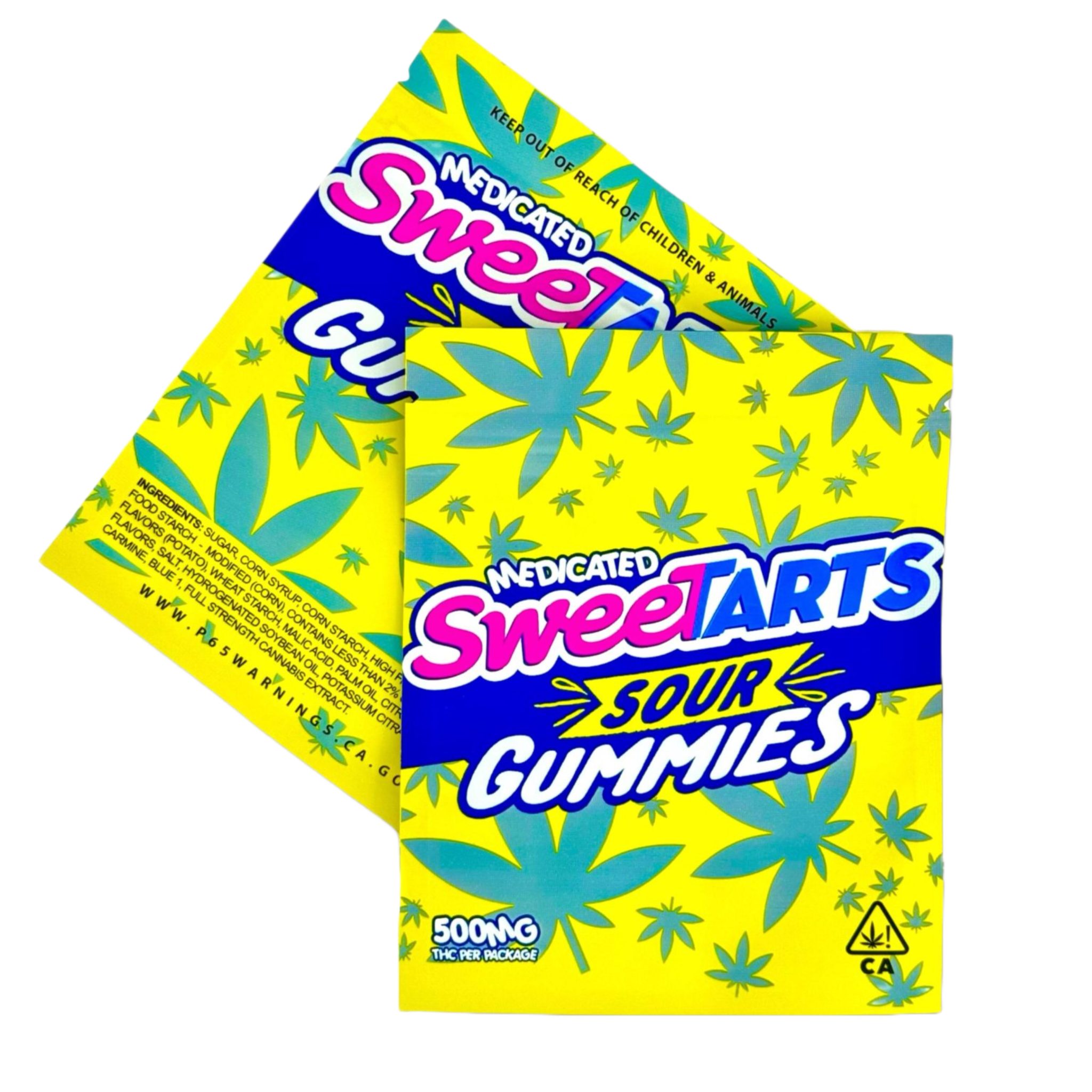
Walk through any British city and you will see sweets with cannabis-leaf packaging. Most legitimate versions are CBD products using cannabis branding for style, not THC content. A smaller, riskier corner of the market sells genuine THC sweets illegally, often imported and untested. Counterfeit “Stoney Patch” or “Nerds Rope” style packets seized by Trading Standards frequently contain unknown doses, which is exactly why dosage matters so much. Our THC gummies dosage guide explains why an unlabelled edible is so much harder to use responsibly than a properly measured one.
The health and safety angle
Edibles behave very differently from smoking or vaping. When you eat a cannabinoid, it passes through your digestive system and liver before reaching your bloodstream, so effects are delayed and can be far stronger and longer-lasting. This is the single biggest reason emergency departments see edible-related incidents: people take a second dose before the first has kicked in. If you want to understand the timing, read our explainer on how long THC gummies take to kick in. The lesson applies to any potent edible: start low and wait.
For comparison, inhaled products such as vapes reach the bloodstream within minutes, which makes timing easier to judge – one reason many adults research the differences before choosing a format. You can see how the inhaled side of the market is presented at thcvapeshop.uk, which focuses on vape formats rather than edibles.
Buying cannabis edibles in the UK: a safer checklist
- Check the cannabinoid. Legal edibles are CBD-based with only trace THC. Anything promising a strong high is a controlled product.
- Look for lab reports. A trustworthy brand publishes third-party certificates of analysis showing exact cannabinoid content.
- Confirm clear labelling. Milligrams per piece, ingredients, allergens and batch numbers should all be present.
- Prefer FSA-aligned brands. Novel Food compliance is a strong signal that a CBD edible is made to a proper standard.
- Avoid copycat packaging. Sweets dressed up as famous American candy brands are a classic counterfeit red flag.
You can browse compliant options across our edibles UK collection and the wider gummies range, or read more about how we operate on our about us page.
Will the law on cannabis edibles change?
The UK has legalised medical cannabis since 2018, but only through specialist prescription – it is not the same as recreational cannabis edibles being made legal. Several countries have moved toward regulated adult-use markets, and campaigners argue Britain will eventually follow. For now, though, the framework is clear: THC stays controlled, CBD stays permitted within limits, and the safest path is to shop with brands that respect that line. If you have more questions, our FAQ page covers the topics customers ask most.
Frequently asked questions
Are CBD edibles legal in the UK?
Yes. CBD edibles are legal as food supplements when they contain only trace THC and meet Novel Food requirements. They are the legal face of the cannabis edibles market.
Is it illegal to possess a THC gummy?
Possession of an edible containing a controlled amount of THC is an offence under the Misuse of Drugs Act 1971, because the THC itself is a Class B drug.
Can I bring cannabis edibles back from abroad?
Importing THC edibles from countries where they are legal is still illegal in the UK and can lead to seizure and prosecution. Legality abroad does not transfer at the border.
How can I tell if an edible is legal?
Check that it is a CBD product with lab-verified trace THC, clear milligram labelling and, ideally, Novel Food alignment. If the selling point is the high, treat it as a controlled product.
A brief history of cannabis law in Britain
To understand why cannabis edibles are treated the way they are, it helps to look back. Cannabis was first restricted in the UK under the Dangerous Drugs Act 1925, and the modern framework arrived with the Misuse of Drugs Act 1971, which placed cannabis in Class B. It was briefly downgraded to Class C in 2004 before being returned to Class B in 2009 amid concern about high-potency strains. Throughout all of these changes, the controlled substance has always been THC, not the cannabis plant in the abstract. That history is why a hemp extract rich in CBD can be sold legally while a sweet packed with THC cannot, and why modern cannabis edibles are judged by exactly the same logic.
How edibles differ from oils, flowers and vapes
Format matters more than most shoppers realise. A CBD oil placed under the tongue is absorbed partly through the lining of the mouth, giving a relatively quick and predictable response. An edible, by contrast, must survive digestion. In the liver, cannabinoids are metabolised before they circulate, which changes both the strength and the duration of the effect. This is why cannabis edibles are famous for creeping up on people: the onset is slow, the peak is delayed, and the experience can last for hours. With CBD this simply means a gentle, gradual sense of calm; with illegal THC sweets of unknown strength it can mean an overwhelming experience. Knowing the format you are taking is part of using any cannabis product responsibly.
Cannabis edibles, driving and the workplace
Even legal CBD users should be cautious. Trace THC in poorly made products can, in rare cases, accumulate and show up on a sensitive drug test, and the UK operates a strict zero-tolerance approach to THC behind the wheel. If your job involves driving, machinery or random testing, choose broad-spectrum or isolate-based CBD edibles with verified non-detect THC, and keep the certificate of analysis. Genuinely psychoactive cannabis edibles have no place near driving at all, because the impairment they cause is significant and long-lasting.
Storing edibles safely
Because they look exactly like ordinary sweets, edibles pose a real risk to children and pets. Accidental ingestion of THC sweets is one of the most common reasons families end up in hospital with a cannabis-related emergency. Whatever you buy, store it in its original, clearly labelled packaging, keep it high up and out of reach, and never decant edibles into unmarked containers. Treating cannabis edibles with the same care you would give to medicine is simply common sense. For more practical guidance on getting the most from gummies safely, our guide to THC gummies for sleep covers timing and routine in detail.
Quick comparison: legal versus illegal edibles
- Main cannabinoid: legal edibles rely on CBD; illegal ones rely on THC for a high.
- Psychoactive effect: legal CBD edibles do not get you high; THC edibles do.
- Lab testing: legitimate brands publish certificates; illegal sweets rarely do.
- Labelling: compliant products list milligrams, ingredients and allergens; counterfeits copy famous candy branding.
- Legal status: CBD edibles within limits are permitted; THC edibles are controlled under the Misuse of Drugs Act 1971.
How reputable retailers keep cannabis edibles compliant
A responsible UK retailer does several things behind the scenes to make sure the cannabis edibles on their shelves stay on the right side of the law. They source from manufacturers who batch-test every production run, they keep certificates of analysis on file and available to customers, and they reject any product whose THC reading drifts above the legal trace threshold. They also age-restrict sales, refuse to ship to regions where a product is prohibited, and avoid packaging that mimics children-focused branding. When you are comparing where to buy, these quiet operational habits matter far more than flashy marketing claims. A shop that is transparent about testing and honest about what its cannabis edibles can and cannot do is almost always the safer choice, and it is a good sign that the wider business takes compliance seriously across everything it sells, from gummies to oils.
Shopping for cannabis edibles online versus in person
Where you buy your cannabis edibles matters almost as much as what you buy. On the high street, you can inspect packaging in person, but staff are not always able to answer detailed questions about cannabinoid content or lab testing. Buying cannabis edibles from a specialist online retailer often gives you far more information: full product descriptions, certificates of analysis, milligram breakdowns and customer guidance all in one place. The trade-off is that you cannot hold the product before it arrives, so reputation and transparency become your main safeguards.
Wherever you shop, apply the same scrutiny. Reputable sellers of cannabis edibles are upfront about exactly which cannabinoids a product contains, publish their testing, age-verify their customers and never disguise potent products as ordinary children-s sweets. If a listing is vague about what is inside, or leans entirely on the promise of a powerful high rather than clear information, treat that as a warning sign. The most trustworthy cannabis edibles brands compete on transparency and quality, not on hype, and they make it easy for you to understand precisely what you are putting into your body.
Taking a few minutes to read the label, check for lab results and confirm the legal status of a product before you buy is the single best habit you can develop. It turns the often-confusing world of cannabis edibles into something you can navigate calmly and confidently, whether you are after a gentle CBD treat or simply trying to understand what is legal in the UK.
The bottom line
So, are cannabis edibles legal in the UK? CBD edibles within the legal limits are; psychoactive THC edibles are not. The smartest approach in 2026 is to understand the cannabinoid you are buying, insist on transparent lab testing and labelling, and treat eye-catching claims about strength with healthy scepticism. When you shop with that mindset, you can navigate the UK cannabis edibles market confidently and safely. Browse our full shop to see how compliant products are presented, or check delivery information before you order.